
This post may include affiliate links.
What’s the difference between refined vs unrefined coconut oil? Here’s what to know about these two types and when to use them.
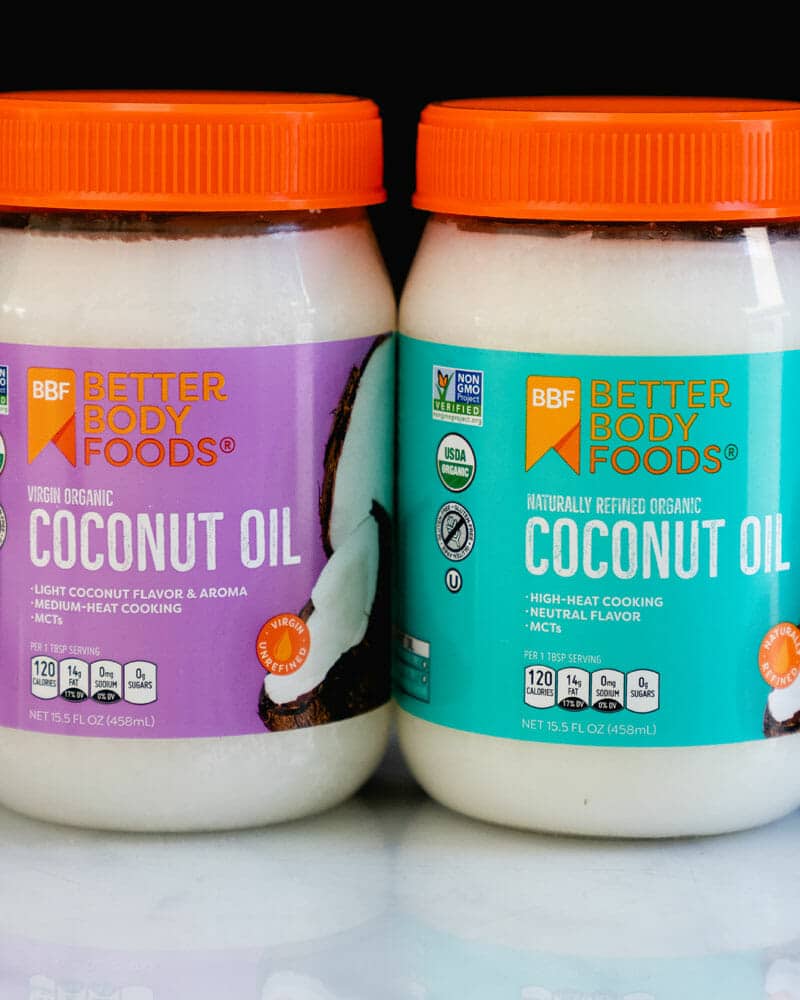
Refined vs unrefined coconut oil: what’s the difference? Which type of coconut oil is better for you?
I’m a professional recipe developer and cookbook author who’s been using coconut oil for years. While refined and unrefined sound like the same product, there’s a distinct difference you’ll want to know about. Here’s what I’ve learned and when to use each in your cooking.
Refined Vs Unrefined Coconut Oil: Overview
What’s the difference between these two coconut products? Here’s a breakdown:
- What is unrefined coconut oil? Also known as virgin coconut oil, this type comes from fresh coconut meat that is cold pressed. Unrefined coconut oil has a strong coconut flavor. You can heat it up to 350 degrees Fahrenheit.
- What is refined coconut oil? Refined coconut oil comes from dried coconut meat that goes through a refining process to make it more suitable for cooking. As a result, refined coconut oil has a neutral flavor, meaning you can use it as a substitute for butter without making the recipe taste like coconut. It also has a higher smoke point of 400–450°F, so it’s great for high-heat cooking and baking.
Is Coconut Oil Healthy?
This is a subject of great debate in the health and wellness community. Coconut oil has been portrayed by some as the best healthy oil for cooking, and by others a poisonous toxin. It’s hard to know who to trust, so I go by the Harvard opinion.
According to Harvard Medical School, “coconut oil is neither superfood nor poison.” That is, it’s a cooking oil that’s best consumed in moderation. Feel free to use it in the occasional baked goods or pie crust (see below), and it’s a great vegan substitute for butter. What’s the healthiest oil choice? Experts agree you should opt for olive oil.

Which Type Of Coconut Oil Is Better For You?
Here’s the key thing to note. Unrefined and refined coconut oil have the same nutritional profile. That’s good news! Because it means that you can use the more versatile oil, refined coconut oil, all the time (which I do). Scroll down to see some of the ways I use it.
How To Shop For Coconut Oil
Here are some tips for terms on the labels when shopping for coconut oil:
- Virgin and extra virgin: These are both unrefined. Unlike olive oil, there’s no official difference between the two terms for coconut oil.
- Expeller pressed or physically refined: These are words printed on the labels of refined coconut oil: they mean the oil was pressed mechanically and no chemical solvents were used during the process.
When To Use Refined Vs Unrefined Coconut Oil In Cooking
What’s the best way to use refined vs unrefined coconut oil? As I mentioned above: the most versatile coconut oil is refined coconut oil. It has a neutral flavor so you barely taste the coconut at all. You can also heat it up to 400–450°F so it’s great for sauteing. In fact, I only buy refined coconut oil over here. Here’s a breakdown of how to use both types:
- Unrefined coconut oil: Use it in recipes where you want a strong coconut flavor. You can use it in baking and body care.
- Refined coconut oil: This oil is much more versatile because of its neutral flavor. Use it in body care, vegan baked goods, for sauteing and stir fries, vegan pie crust, vegan scones, vegan cookies, and more.
Which is best for baking? It depends on the flavor you want. Refined coconut oil tastes neutral, so it’s great for pie crust and cookies. Unrefined is nice if you’re ok with a coconut flavor, like in granola or banana bread.
My Favorite Coconut Oil Recipe
Coconut Oil Cookies

These coconut oil cookies are a one-bowl recipe that makes for a chewy gluten free cookie topped with flaky sea salt.
- Prep Time: 15 minutes
- Cook Time: 10 minutes
- Total Time: 25 minutes
- Yield: 16 cookies 1x
- Category: Dessert
- Method: Baked
- Cuisine: American
- Diet: Vegan
Ingredients
- 1 tablespoon ground flaxseed
- 3 tablespoons water, plus more if necessary
- 2 tablespoons refined coconut oil, softened but not melted
- ½ cup brown sugar (or coconut sugar)
- ¼ cup almond butter
- 1 teaspoon vanilla extract
- 2 cups almond flour
- ½ teaspoon baking soda
- ¼ teaspoon sea salt
- ½ cup vegan semisweet chocolate chips
- Flaky sea salt, for sprinkling
Instructions
- Preheat the oven to 350F and line a baking sheet with parchment paper.
- In the bottom of a large bowl, whisk together the ground flaxseed and water and let thicken for 5 minutes.
- To the same bowl, add the coconut oil, sugar, almond butter, and vanilla. Whisk until well combined. Add the almond flour and sprinkle the baking soda and salt evenly over the mixture. Use a spatula or wooden spoon to stir until well combined, adding 1 to 2 tablespoons water if the mixture is too dry. Fold in the chocolate chips.
- Use a 2-tablespoon cookie scoop to scoop the dough onto the baking sheet. Press each ball down slightly and sprinkle with flaky sea salt, if using. Bake for 10 to 13 minutes or until the edges are just starting the brown.
- Cool on the pan for 5 minutes and then transfer to a wire rack to finish cooling.
- When the cookies are completely cool, they can be stored in an airtight container or frozen. (To reheat frozen cookies, bake in a 350F oven for 5 minutes or until warmed through.)
Notes
Reprinted with permission from Love and Lemons Everyday by Jeanine Donofrio and Jack Matthews