
This post may include affiliate links.
Here’s how to froth milk at home with three simple methods using a milk frother, French press, or whisk. You can make coffee shop-quality lattes, cappuccinos, and more without an espresso machine!

Want to make a cafe latte or tea latte at home? I’ve learned that there’s no need for a fancy espresso machine with a milk steamer: you can become a barista in the comfort of your own home.
I started experimenting with frothing methods a few years ago, and I’ve tested everything from handheld frothers to a good old whisk. Now I use this method to make vanilla lattes, chai lattes, and even a macchiato at home!
Do you have an espresso maker with a steaming wand? You’ll want to steam your milk instead. Go to my tutorial on How to Steam Milk.
The Best Tool: A Handheld Milk Frother
The results of my research are in: a milk frother is worth the purchase! I’ve found that a milk frother is the best way to get frothy foam for a latte. For months I avoided it and used a French press before I decided to bite the bullet and try a frother.
After testing it out, I was impressed! It’s fast, easy, and makes incredibly frothy foam bubbles. You can get away with using less milk than with other methods, it froths non-dairy milk easily, and it even froths cold milk (which is nearly impossible using other methods).
My favorite frother is this handheld milk frother: it’s inexpensive and works like a charm! You can also use it for other tasks, like whisking vinaigrette dressings.

Tips for Perfect Frothed Milk Every Time
Do not skip this section! There are a few things to know before you start frothing:
- Important: use fresh milk! Fresh milk is key to getting the best foam. If your milk has been in the fridge for a few weeks, it might not foam. (Trust me, I’ve had this issue.) The best way to ensure good foam is milk that’s as fresh as possible.
- Whole milk works best, because it has the highest milkfat. 2% also works. You can also use non-dairy milk like oat milk, but it’s the hardest to froth because it has less fat.
- Heat the milk to scalding first. No matter your method, heating the milk makes for the best results. Place the milk in a saucepan and heat it to scalding or 150°F (measure using a food thermometer). This is hot to the touch, but not simmering.
- Customize the foam bubbles to your drink. For a latte you’ll want smaller bubbles and thicker milk. For a cappuccino or macchiato you want larger bubbles; this will take slightly longer for froth.
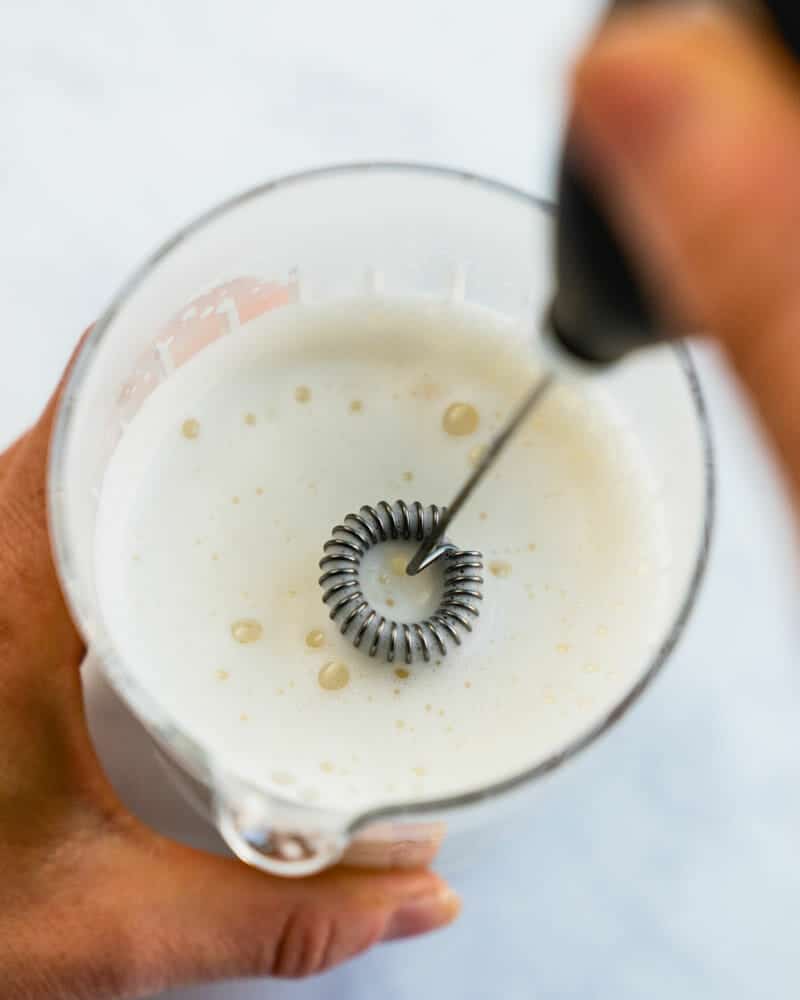
Method 1: How to Froth Milk With a Milk Frother
My favorite method is using a Handheld Milk Frother. Pros of this method: it very easy to use and results in the best foamy bubbles. Another perk: you can use less milk at a time and it works well for non-dairy milk like oat milk. Cons: You have to buy a special tool (but to me, it’s worth it!).
Here’s how to froth milk with a milk frother:
- Heat the milk to scalding or 150°F.
- Place the milk in a tall container. Hold the container at an angle and turn on the frother.
- Move the frother up and down until foamy bubbles form, about 20 seconds or so. Tap the container on the counter to break down any large bubbles.
Important: For a latte, don’t go too far: you want the milk to mix in with the coffee so you don’t need too much froth. (For a cappuccino or macchiato you’ll want lots of foam.) For a latte, let the foam rest for 30 seconds to 1 minute to get the foam to incorporate into the milk and separate slightly.
Method 2: How to Froth Milk With a French Press
The next best method for how to froth milk is using a French press. If you already have a French press for making coffee, you can use it to make foam too.
This method works very well, but it’s not quite as quick and easy as the frother. It also can be a little temperamental, especially with non-dairy milk. If you’re using oat milk, you’ll need to be careful you don’t overwhip it. Here’s how to froth milk with a French press:
- Heat the milk to scalding or 150°F. You’ll get best results with 1 cup of milk with this method, so it may make more than 1 drink depending on the recipe.
- Add the scalding milk to the French press. Pump using quick, short plunges until foamy bubbles form, about 30 seconds. If you’re using oat milk, pump only about 25 times because the foam can deflate when overwhipped.
- Pour into a pitcher and tap it on the counter to break down large bubbles.

Method 3: How to Froth Milk With a Whisk
You can use a whisk to froth milk, but it takes longer and the foam doesn’t have as tight of bubbles. You’ll also get a little less foam than with the other methods. But if you don’t mind the bubble quality, then it’s a great method because you don’t have to buy anything special. Here’s how to froth milk with a whisk:
- Heat the milk to scalding (150°F).
- Use a whisk to vigorously whisk it until foamy bubbles form*.
- Pour into a pitcher and tap it on the counter to break down large bubbles.

What to Make with Frothed Milk
Once you’ve mastered milk frothing, there are so many drinks to make! I love to make classic espresso drinks like the latte, cappuccino, mocha, and macchiato and they all taste nearly as good as my favorite coffee shop.
Tea drinks with frothed milk are also delicious, like a chai latte, vanilla chai latte, and matcha latte, or even a London Fog. If you’re feeling adventurous, try my favorite drink: the dirty chai latte, which is a tea latte spiked with a shot of espresso.

Storage and Make-Ahead Tips
Frothed milk is best used immediately: the foam begins deflating within minutes as the air bubbles escape. I don’t recommend trying to store frothed milk in the fridge. Instead, heat and froth your milk fresh each time you make a drink.
If you’re making drinks for several people, froth all the milk at once in a larger container, then immediately pour and serve each drink. The foam will hold up well for about 5 minutes.
Frequently Asked Questions
I’ve tried this method, and while it technically works, a blender creates foam that’s too airy and large-bubbled for most coffee drinks. You’re better off using one of the three methods I’ve outlined above.
Whole milk produces the richest, most stable foam thanks to its higher fat content. 2% milk works great too. For plant-based options, oat milk froths better than most alternatives.
A handheld frother can handle cold milk reasonably well, making it perfect for iced lattes. The other methods (French press and whisk) need heated milk to create good foam. Cold milk doesn’t froth as well because the proteins don’t stabilize the bubbles as effectively.
The key with oat milk is not to over-agitate it. If you’re using a French press, pump no more than 25 times. With a frother, keep your frothing time short: around 15-20 seconds max. Over-working oat milk can create a slimy texture.
Usually it’s a freshness issue. Milk that’s more than a week or two old often won’t froth well because the proteins have started breaking down. Check your milk’s date and try again with a fresh carton. Also make sure your milk is hot enough: cold or lukewarm milk resists frothing.
How to Froth Milk (3 Best Ways!)

Here’s how to froth milk for lattes…the three best ways! You can use everything from a milk frother to a good old whisk.
- Prep Time: 5 minutes
- Cook Time: 0 minutes
- Total Time: 5 minutes
- Yield: Enough for 2 lattes 1x
- Category: Essentials
- Method: Frothed
- Cuisine: Coffee and tea
- Diet: Vegetarian
Ingredients
- ½ cup fresh milk (whole milk works best; milk that is a few weeks old may not froth)
- Tool for the job: Milk frother, French press, or whisk
Instructions
- Heat the milk: Place the milk in a saucepan and heat it to scalding or 150°F (measure using a food thermometer if possible). This is hot to the touch, but not simmering.
- How to froth with a milk frother (easiest and best method): Place the milk in a tall container. Hold the container at an angle and turn on the frother. Move the frother up and down until foamy bubbles form*, about 20 seconds or so. Tap the container on the counter to break down any large bubbles.
- How to froth with a French press: Add the scalding milk to the French press and pump using quick, short plunges until foamy bubbles form*, about 30 seconds**. Pour into a pitcher and tap it on the counter to break down large bubbles. You’ll get best results with 1 cup of milk for two drinks.
- Whisk method: Add the scalding milk to a bowl and use a whisk to vigorously whisk it until foamy bubbles form*. Pour into a pitcher and tap it on the counter to break down large bubbles.
Notes
*For a latte you’ll want smaller bubbles and thicker milk; for a cappuccino or macchiato you want larger bubbles (which takes slightly longer).
**If using oat milk and a French press, pump vigorously until frothy, about 25 times. Do not overwhip, as the foam will deflate!



thank you, for the latte coffee recipe.😍😍😍
You seem to mention Starbucks a lot, I mean A LOT, to the extent that it seems like product placement. Just curious if one, or both, of you work there.
No, we are not affiliated with Starbucks. We mention this brand since many people in America have an idea in their mind about coffee or tea drinks based on how it’s made at this coffee chain, so we indicate how ours is similar or different. Any brand partnerships have a clear disclosure at the beginning of the article. Thanks for the question!
I am living alone, and would like simple recipes.
Hope you are willing to clarify. When making a double shot of espresso using a French press with preground espresso roast coffee what is the measure of ground coffee. Your recipe suggested 30 ml, but ml is a liquid measure. What would that translate as dry weight?
Hi! A half cup of grounds will make 2 doubleshots.
I just bought an espresso machine but don’t know how to froth with it.When I turn the handle for steam it shoots the steam downwards on the table
You need a milk jug to stick under the wand. We have steaming instructions here: https://www.acouplecooks.com/how-to-steam-milk/