

What are the differences between tempeh vs tofu? Here’s what you need to know about these two plant-based proteins.

Tempeh vs tofu: what’s the difference? These two plant-based soy proteins are both part of a healthy diet. In fact, they’re a much better choice than many of the processed meat alternatives out there today!
As author of a vegetarian cookbook and loads of vegan and vegetarian recipes, I’ve worked with both products for many years. What are some of the major differences? Here’s a breakdown in definition, nutrition, and flavor.
Tempeh Vs Tofu: An Overview
Tempeh and tofu are both soy products that work as a plant-based protein in a vegetarian or vegan meal. The difference is in the production process:
- What is tempeh? Tempeh is a compressed cake of whole soybeans. It can sometimes include seeds like millet or grains like wheat, rice, or barley (many brands are gluten-free). The soybeans are soaked to soften them, then cooked and fermented before being formed into a firm patty or block. Tempeh originated in Indonesia in the 1500s, and is common in Southeast Asian cuisine. It has a hearty texture and slightly nutty flavor that makes it an ideal meat substitute.
- What is tofu? Tofu is a soy milk that’s turned into curds, similar to cheesemaking, and pressed into blocks. It originated in China about 2,000 years ago. It’s very popular in Asia and it’s becoming more prevalent in the US. Tofu is flavorless and the texture is soft and jiggly, so it requires flavoring and cooking to define its flavor. There are several textures of tofu available: soft or silken, firm, and extra firm.
Bottom line: Tempeh is a pressed cake of whole soybeans with a hearty, chewy texture and a nutty flavor. Tofu is made from soy milk that’s processed into blocks, and is flavorless with a soft texture. Both are ideal plant-based proteins that can be served in many ways.

Nutrition Breakdown
Tempeh vs tofu: which is healthier? Both soy-based products are part of a healthy diet. Per to the Harvard T.H. Chan School of Public Health, soy is a nutrient-dense source of protein that can safely be consumed several times a week. It’s likely to provide health benefits, especially when you eat it as an alternative to red meat and processed meat. (Go to Straight Talk About Soy and Is Tofu Good for You? for more details.)
What’s the nutritional breakdown between the two? Here’s a comparison of 100-grams of tempeh vs tofu:
| Ingredient | Calories | Protein | Carbs | Fiber | Fat |
| Tempeh | 195 cal | 20 grams | 7.6 grams | 9 grams | 11 grams |
| Tofu | 83 cal | 10 grams | 1.2 grams | 1 grams | 5.3 grams |
Data sources: Tempeh nutrition, Health benefits of tempeh, Tofu nutrition
Tempeh is very high in plant-based protein and fiber, with double the protein of tofu (20 grams vs 10 grams). In fact, one serving of tempeh has 40% of the recommended daily intake of protein and 44% of the recommended daily fiber.
In contrast, tofu has fewer calories and half the fat of tempeh, but it has half the protein and almost no fiber. As noted above, both are part of a healthy diet! Per Harvard, soy products can be safely consumed several times per week and probably more often.
How To Prep Tempeh and Tofu Before Cooking
- Tofu: press it. Many people swear by pressing tofu before cooking it for the best texture, though most of my recipes don’t require it. Typical advice is to wrap a block of firm or extra-firm tofu in a clean kitchen towel, put something heavy on top (a skillet or a few cookbooks), and let it sit for 15 to 20 minutes. See each of my tofu recipes on whether pressing is needed.
- Tempeh: simmer it. Out of the package tempeh can taste a little bitter. You can simmer the block in a pot of water (or steam it) for about 10 minutes before cooking, which mellows the flavor and can help it to soak up seasoning better.
Bonus tip: I’ve also seen on social media that freezing tofu, then thawing it, gives it a chewier texture that’s fantastic in stir fries. I need to try this! Let me know in the comments if you have.
Ways To Cook Tempeh and Tofu
When it comes to cooking tempeh vs tofu, there are several differences! Tempeh has a firm texture and a nutty flavor, whereas tofu is bland with a soft texture.
- Can you eat tofu raw? Yes, tofu is safe to eat raw. Try it in Easy Marinated Tofu, in a creamy salad dressing, or even in Tofu Chocolate Pudding.
- Can you eat tempeh raw? Yes, most tempeh brands are pasteurized, so it is safe to eat raw (just check the package). However tempeh has a bitter flavor when it’s raw, so we recommend cooking it.
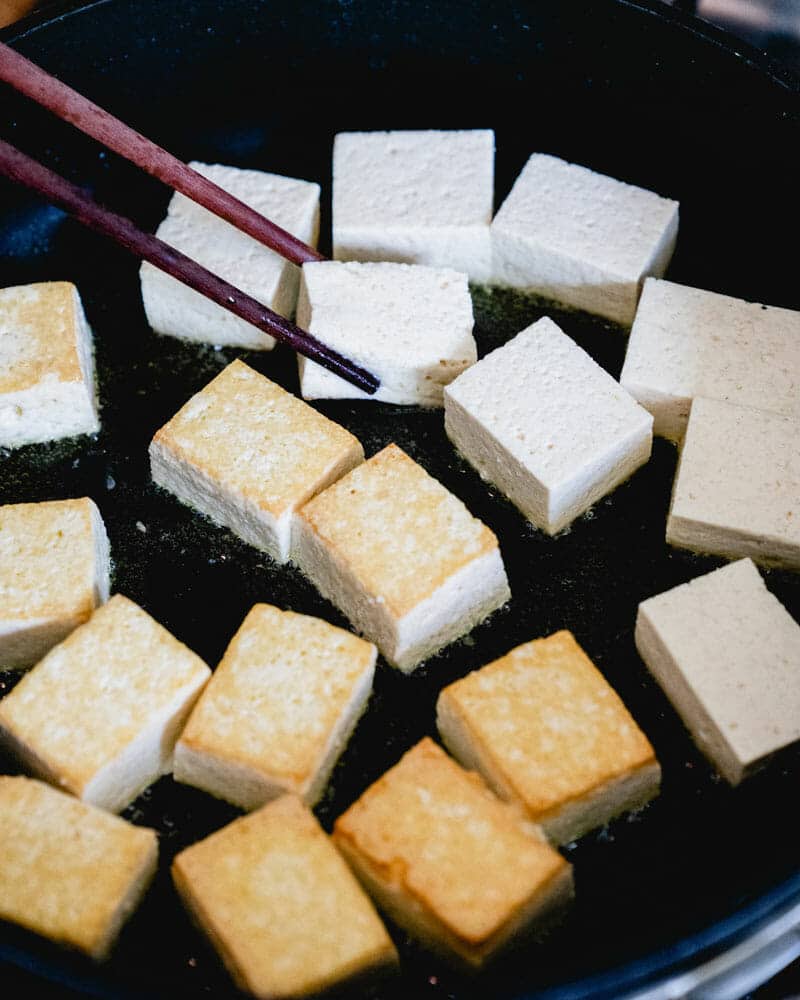
- How to cook tofu? Fry it in a Tofu Scramble, or cook it crispy as Pan Fried Tofu or Air Fryer Tofu. It’s fantastic in a Thai-style Coconut Tofu Curry, or a Tofu Stir Fry. These Quick Tofu Crumbles taste meaty and are perfect in Easy Tofu Tacos.
- How to cook tempeh? Tempeh is great as Marinated Tempeh, rolled into Tempeh Meatballs, or cut into strips and sautéed in a Tempeh Stir Fry. Or make it into smoky Tempeh Bacon for a Vegan BLT Sandwich.
For more: Go to 25 Tasty Tofu Recipes or 20 Tempeh Recipes.



How can you suggest that tofu is “tasteless.” I have been eating it for years, after spending many years in Japan, where it is eaten uncooked as “hiyayakko,” and it is delicious. Wonderful taste!
Tofu is bland with no flavoring — but we agree, it’s delicious when flavored with added flavorings! The hiyayakko dish you referenced is flavored with green onion, bonito flakes and soy sauce to bring in the flavor (see https://www.justonecookbook.com/japanese-tofu-cold-tofu-hiyayakko/).
I have yet to find a way to make tempeh taste good…I have put in the effort. It’s just not eatable.
When do you add the sesame seeds? Thanks
At the end as a garnish: we’ve updated the recipe accordingly!