
This post may include affiliate links; see our disclosure policy.
This pizza dough from bread flour makes a chewy, hearty crust like your favorite pizzeria! Here’s how to work with this high-protein flour and master the perfect slice.
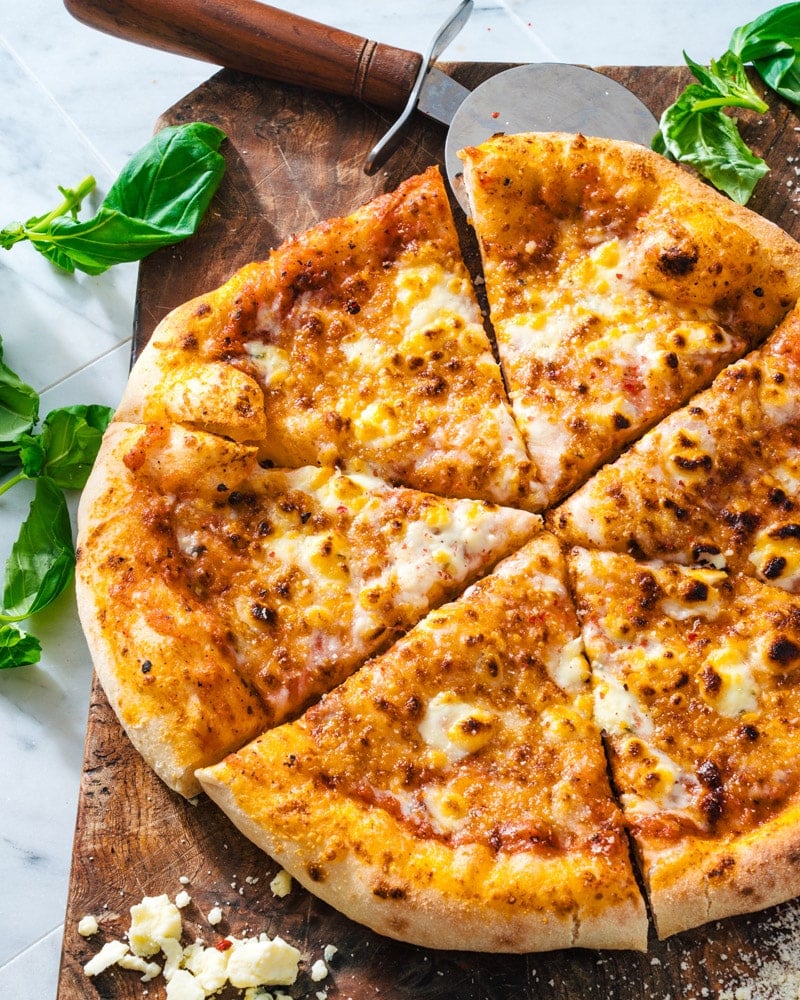
Most of the time, I’m a pizza snob: I make pizza dough with Italian flour (Tipo 00) because it has next level flavor and texture. But the other day I decided to test my favorite homemade pizza dough recipe with bread flour.
Turns out, the crust still had a substantial, satisfying chew that actually reminded me of my favorite New York-style slice! I still love Italian flour, but I’ve found bread flour pizza dough is absolutely delicious with no need to hunt down fancy flour — and it’s way tastier than all-purpose flour!
Why This Recipe Works
Bread flour has a higher protein content than all-purpose flour, making a texture that’s more chewy than crumbly. All-purpose flour can tear easily, but bread flour is very strong.
Bread flour results in a taller rise and a signature chewy interior. I’ve balanced the hydration here so the dough is workable but moist enough to crisp up on a pizza stone. I highly prefer bread flour to all purpose flour in a pizza dough!
Comparison: Bread Flour vs. Tipo 00 vs. All-Purpose
Choosing your flour is key to the final texture you want to achieve in your pizza dough. Here is how they compare based on my testing:
| Feature | Tipo 00 (Italian Style) | Bread Flour (Chewy) | All-Purpose (Standard) |
| Handling | Soft and supple, easy to handle | Tougher elasticity; resists stretching and snaps back | Weaker; may tear if stretched too thin. |
| Texture | Light, airy, and tender with a delicate crispy exterior | Chewy, hearty, with a satisfying chew | Softer and slightly denser |
Tips for Success with Bread Flour
To get the most out of this flour, here are a few things to keep in mind:
- Rest it longer. Because of the high elasticity, bread flour dough benefits from a longer rest. If you have the time, let the dough balls sit at room temperature for 1 ½ hours instead of 1 hour.
- When you stretch it, don’t fight the dough. When you stretch bread flour dough, it can to snap back like a rubber band. If this happens, simply set it down, cover it with a towel, and let it rest for 5 to 10 minutes. This allows the gluten to relax, making it much easier to stretch out again.
- Try a blend. If you want the browning and structure of bread flour but the ease of handling of Tipo 00, try a 50/50 mix of the two flours.
- Weigh your ingredients. I cannot stress this enough: using a kitchen scale is the only way to get consistent dough! Bread flour can be dense, and scooping with a cup often leads to over-floured, dry dough.
- Try cold fermentation if you have time. I highly recommend placing the dough in the fridge for 2 to 3 days. This develops a complex, fermented flavor that tastes like a professional pizzeria.
Equipment You’ll Need
Ready to make pizza dough from bread flour? Here’s what you’ll need:
- Kitchen scale: Measuring in grams makes for consistent results every time (I use this one).
- Stand mixer with dough hook (optional): You can knead by hand, but a KitchenAid mixer makes the process way easier and hands-off. Either method takes 8 minutes.
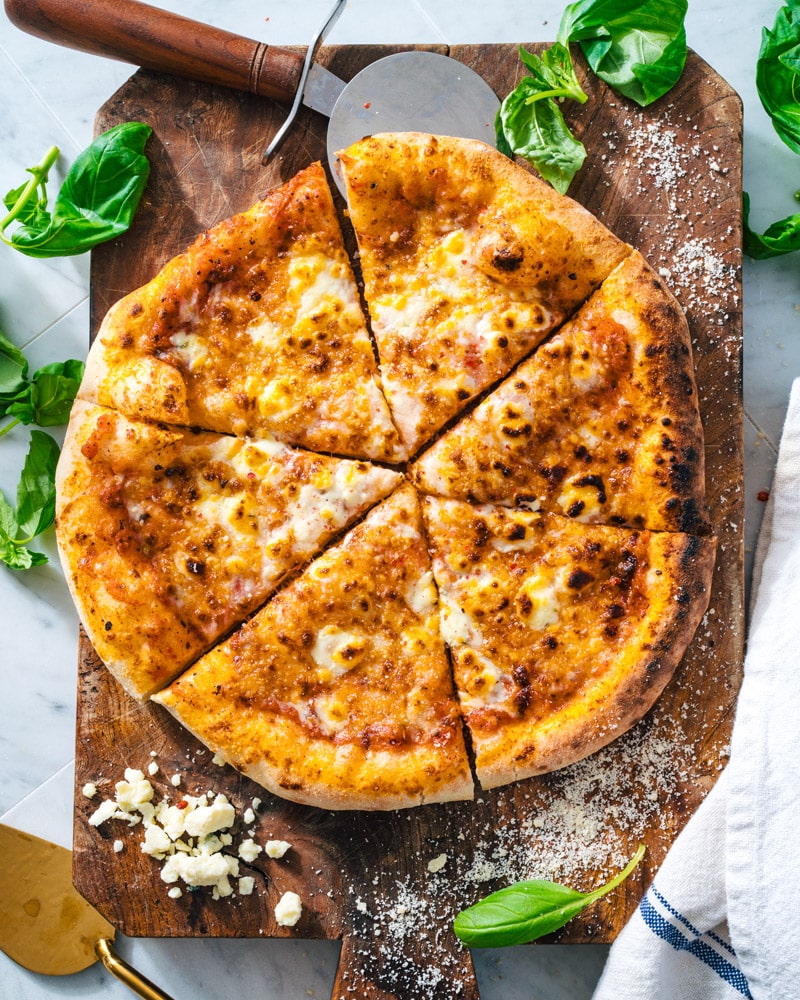
- Pizza stone: This is my #1 tool recommendation for the best pizza dough. I preheat mine at 500°F for 30 to 45 minutes before baking. Here’s the pizza stone I use.
- Pizza peel: This is for transferring pizzas to your hot stone. A rimless baking sheet can work in a pinch. Here’s the pizza peel I use.
If you don’t have a pizza stone, make my Sheet Pan Pizza or Pan Pizza instead: both methods are forgiving and don’t require specialty equipment. You can use bread flour in either one.
Serving Suggestions
The bread flour pizza crust is perfect for heavier toppings. Here are a few of my favorite ways to top it:
- Classic: Try a layer of pizza sauce topped with mozzarella and pepperoni, or my classic Margherita pizza or Caprese pizza recipes.
- Veggie Loaded: Try my Mushroom Pizza or Spinach Artichoke Pizza.
- Unique: Go for this White Pizza or my favorite Taco Pizza.
Storing and Freezing
This recipe makes enough for three pizzas, and leftovers store well. You can refrigerate the dough in separate containers brushed with oil for up to 3 days, or freeze the dough.
- To Freeze: After the initial rise, divide the dough into balls. Lightly coat each in olive oil and wrap tightly in plastic wrap, then place in a freezer-safe bag. They last for up to 3 months.
- To Thaw: Place the frozen dough ball in the refrigerator overnight. Before baking, pull it out and let it come to room temperature on the counter for 30 minutes before stretching.
Bread Flour Pizza Dough

This pizza dough from bread flour makes a chewy, hearty crust like your favorite pizzeria! Here’s how to work with this high-protein flour and master the perfect slice.
- Prep Time: 1 hour
- Cook Time: 15 minutes
- Total Time: 1 hour 15 minutes
- Yield: 3 medium pizzas (about 11 inches in diameter) 1x
- Category: Main Dish
- Method: Baked
- Cuisine: Italian
- Diet: Vegetarian
Ingredients
- 500 grams* bread flour (3 ⅓ cups)
- 8 grams instant or active dry yeast (2 teaspoons)
- 7 grams kosher salt (1 teaspoon)
- 338 grams warm water (1 ¼ cups + 3 tablespoons)
- 13 grams olive oil (1 tablespoon)
Instructions
- Combine the flour, salt, and yeast in a bowl or the bowl of your stand mixer. Stir to combine. Add the water and olive oil and stir until a raggy dough forms. Turn the dough out onto a floured surface.
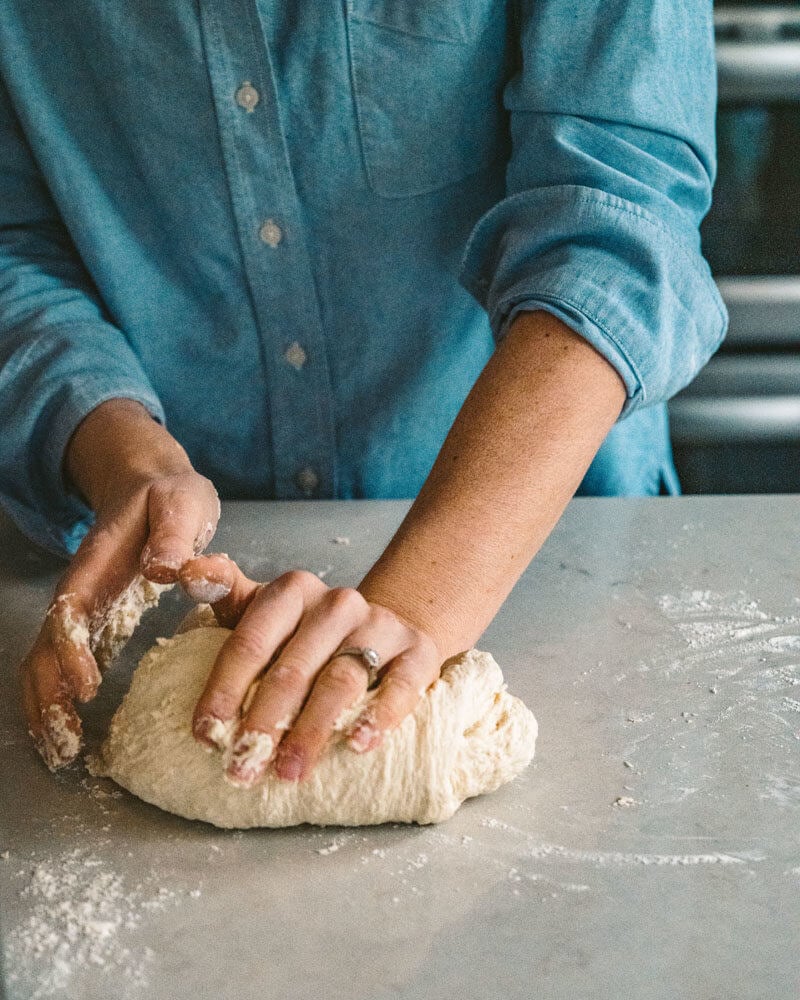
- Knead the dough by pushing with the base of your palm, then reforming it into a ball. Continue kneading for 8 minutes until the dough feels pillowy and has a smooth, stretchy exterior. If the dough is very sticky, add a small amount of flour while kneading. Alternatively: attach the dough hook to a stand mixer and start the mixer on medium-low speed, then allow the mixer to knead for 8 minutes.
- After the kneading is finished, divide the dough into 3 equal pieces. Using floured hands, gently shape each half into a boule (ball shape) by folding the dough under itself. Set each boule on a floured surface and dab the dough with a bit of olive oil to keep it moist. Cover all boules with a damp towel and allow them to rise at room temperature until doubled in size, about 45 minutes to 1 hour.
- The dough can be used immediately: go to Step 6. For next-level flavor, you can transfer the dough to separate sealed containers brushed with olive oil to prevent sticking, large enough for the dough to double in size again, and store in the refrigerator for 2 to 3 days. (If you think ahead, this makes for a noticeably nutty, unique flavor that truly is the best homemade pizza dough.) You can also freeze pizza dough you don’t plan to use that day.
- **If you’re using the dough after refrigerating: The day of serving, remove the dough from the refrigerated containers, place it on a lightly floured surface covered with a towel, and allow it to come to room temperature before stretching, 30 to 45 minutes. (This is not required if you’re using the dough immediately after proofing.)
- Place a pizza stone in the oven and preheat to 500°F. OR preheat your pizza oven (here’s the pizza oven we use).
- To stretch the dough, place it on a lightly floured surface and gently press it into a circle, flipping several times and adding a pinch of flour if it is too sticky. Once you have about an 8-inch circle, pick up the dough and gently drape it over the knuckles on both of your hands. Slowly rotate it around, allowing gravity to stretch it into a circle about 11 inches in diameter. Do not overwork or fold the dough. If the dough starts to resist stretching, put it down and allow it to rest for a few minutes, at which point it will stretch more easily. Then gently place the dough onto the pizza peel.
- Add your pizza toppings (like a ⅓ to ½ cup of this Homemade Pizza Sauce and cheese). Use the pizza peel to carefully transfer the pizza onto the preheated pizza stone. Bake the pizza until the cheese and crust are nicely browned, about 5 to 7 minutes in the oven (or 1 minute in a pizza oven).
- Allow the pizza to cool for a minute or two, then add fresh basil (if using), slice into pieces, and serve immediately.
Notes
- Weigh your ingredients: Using a food scale makes sure you have consistent results every time! I use this one.
- Hand kneading vs. stand mixer: Both methods work perfectly, though stand mixer is much easier.
- If the dough feels sticky: Pizza dough should be slightly tacky. If it’s too wet to handle, dust with small amounts of flour while kneading.
- Shaping tip: If the dough snaps back during stretching, cover it and let it rest on the counter for 5-10 minutes. This is normal due to the higher gluten content.
- Make ahead: This dough actually improves with time. Refrigerating in separate containers brushed with oil for 24-72 hours develops deeper, more complex flavor.
- Freezing: Wrap shaped dough balls tightly in plastic wrap and freeze for up to 3 months. Thaw overnight in refrigerator before using. See How to Freeze Pizza Dough.
- Baking tips: Preheat your pizza stone or baking sheet in the oven at 500°F for at least 45 minutes. This ensures a crispy bottom crust.


Had trouble getting the pizza to “slide” on my first attempt. Second try, I put parchment on the slide placed dough on top and made the pizza. Trimmed the edges of the parchment so there were no parchment corners. (500 is above the recommended temp for parchment) then it slid perfectly on to the hot stone.